 Formerly Conklin & Ward Dental Group
and Kevin G. Murphy & Associates
Have you found that your smile has grown dull over the years? Over time, it is natural for teeth to become discolored, yet it is still a characteristic that many people are self-conscious about. Fortunately, at Baltimore Dental Arts, we can help you say goodbye to discoloration. We offer take-home professional teeth whitening to help you achieve those brighter results that you’re looking for. Contact our office to learn more and schedule your professional teeth whitening to enhance the natural beauty your smile holds.


Tooth discoloration can be caused by a multitude of different factors. Here are some of the more common causes:
While some tooth discoloration can be prevented, sometimes it is completely out of your control. This is because there are two different types of staining: extrinsic and intrinsic. Extrinsic stains occur on the surface of the teeth and are typically caused by foods, drinks, and tobacco products. This is the type of discoloration that can usually be lifted with teeth whitening. Intrinsic stains can occur as a result of medical conditions and medications, so this is something you’ll need to discuss with your doctor.

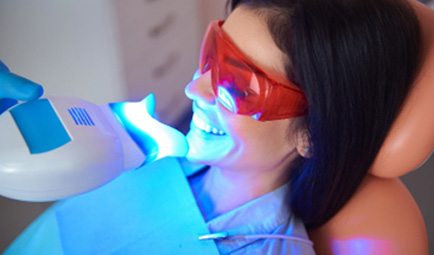
If you want to lift discoloration in the comfort of your own home, a take-home teeth whitening kit is a great option. We will start by examining your smile for any existing oral health issues. Next, you will receive customized trays and a whitening gel that’s stronger than anything you can find over the counter. After just a couple of weeks of wearing these trays for a set amount of time each day, you will see beautiful results.
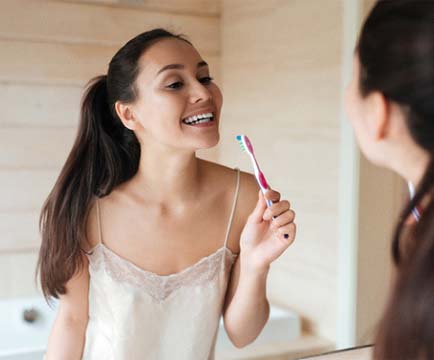
The results of teeth whitening will last longer if you take the time to maintain them. Here are a handful of tips that will help to keep your teeth pearly white:

Now that we’ve covered who is a candidate, the treatment process, and how to maintain your results, it’s time to discuss the cost. The short answer is that there isn’t a one-size-fits-all price. Since each teeth whitening treatment is completely personalized, the price varies. Don’t worry – that doesn’t mean understanding the cost has to be difficult. On the contrary, we’re here to make learning more on the topic as simple as possible. With this in mind, read on to learn the factors that affect the cost, how to make your treatment more affordable, and more!
When overseen by a qualified dentist, teeth whitening doesn’t hurt. The treatment will painlessly brighten your smile and remain comfortable throughout.
Take our at-home teeth whitening, for example. Our dentists tailor the amount of bleaching gel or "whitener” used for this procedure, ensuring it suits your smile. The result is that the whitening process is very unlikely to cause tooth sensitivity, even as it occurs outside our office.
Of course, there’s always a chance your teeth are inherently prone to sensitivity. You should tell our dental team if that’s the case. By doing so, we can help you compensate by spacing out your treatment, suggesting desensitizing toothpaste, etc.
To be honest, “professional” teeth whitening from a dentist is quite safe. You can trust it to beautify your smile without harming your enamel, gums, or other body parts.
Note that dentists only use vetted ingredients for teeth whitening. Indeed, they make sure the bleaching gel (and similar substances) is approved by the FDA and ADA before implementing it. They don’t want the treatment’s materials to cause an adverse health reaction to your smile.
At the same time, a dentist won’t give you an excessive amount of bleaching gel. They’ll only provide an adjusted percentage that gives you the right results safely.
As effective as teeth whitening normally is, it doesn’t (and won’t) work on dental crowns. The treatment can’t alter the color of prosthetic restorations.
Remember, teeth whitening relies on bleaching gel. This substance removes tooth stains – whether mild or moderate – by passing through the pores in your enamel. Dental crowns lack such pores, though; the caps are made of artificial porcelain or ceramic. That means a teeth whitening treatment won’t change a dental crown’s color.
It’s still possible to get a color-matched dental crown, of course. You can simply opt to get (or replace) the restoration after you’ve had teeth whitened.
While dental insurance can (and does) cover many things, teeth whitening isn’t one of them. Most patients must pay for this service entirely out-of-pocket.
You see, dental plans don’t see a smile-brightening procedure as “medically necessary.” They instead think such oral work is purely based on looks and preferences, without benefits for your body’s health. It follows that the average dental insurance provider won’t cover teeth whitening (or any cosmetic dentistry).
With all that said, exceptions to the facts above exist. There’s still a slight chance your dental plan could provide some partial coverage. Therefore, remember to double-check your policy and ask your dental team for assistance.